
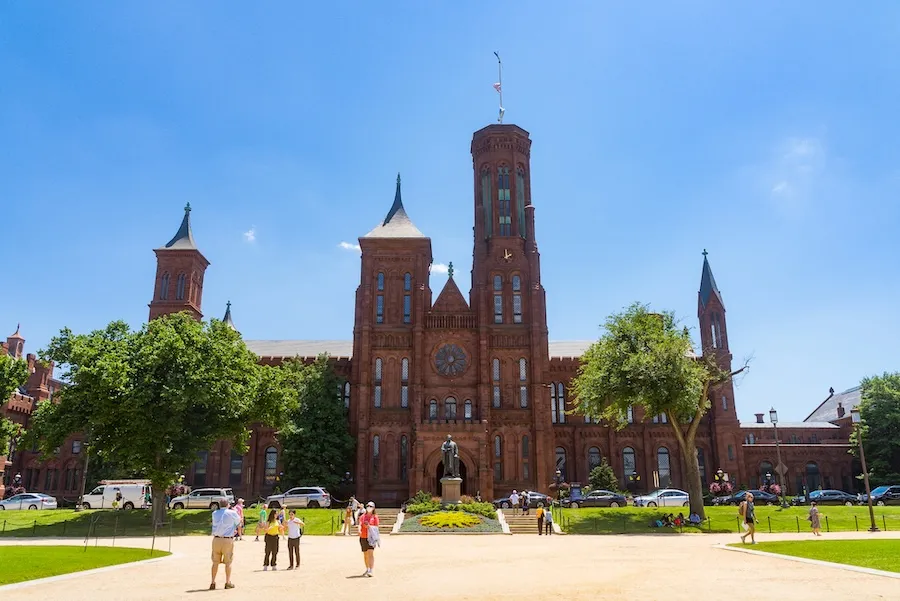

Discover the origins of the National Mall’s iconic red castle and of the Smithsonian Institution itself.
The Smithsonian Castle closed for a multi-year renovation on Feb. 1, 2023.
However, the Castle will temporarily reopen to the public from Memorial Day through Labor Day in 2026, offering a visitor center, café, shop and a special exhibition.
What is the Smithsonian Castle? Is it open?
Known colloquially as the Castle, the Smithsonian Institution Building is the Institution’s first and oldest home, open since 1855. Beyond its role as an iconic part of the city's landscape and architecture, it serves as an introduction to the Smithsonian's mission and a resource hub for visitors to all Smithsonian museums.
No, as of now, the Castle is not currently open to the public. However, the building will pause restoration efforts to temporarily reopen to the public from Memorial Day through Labor Day in 2026.
What kind of renovations is the Castle undergoing?
The first major renovation in more than 50 years, the project will take on many practical changes such as new air conditioning, improved electrical and plumbing systems, and security and accessibility upgrades. The revitalization will also focus on the exterior and interior restoration of the building, returning it to its original floor plan.
Learn more from the Smithsonian Architectural History and Historic Preservation office.
When does the Castle reopen? Will there be exhibits?
During the temporary reopening (May 22 – Sept. 7, 2026), the Castle will showcase a brand-new exhibit to honor America's 250th Birthday: American Aspirations.
The exhibit explores the ideals expressed in the Declaration of Independence, both how they have shaped American identity past and present, but also the ways in which they continue to affect our trajectory as a nation. Some of the Smithsonian's most treasured artifacts will be on display, including:
- Thomas Jefferson’s desk – used to draft the Declaration of Independence
- Harriet Tubman’s hymnal – echoes the spiritual resilience of those who fought for freedom
- The gold flake discovered at Sutter’s mill – sparked the California gold rush
Where is the Castle? How do I get there?
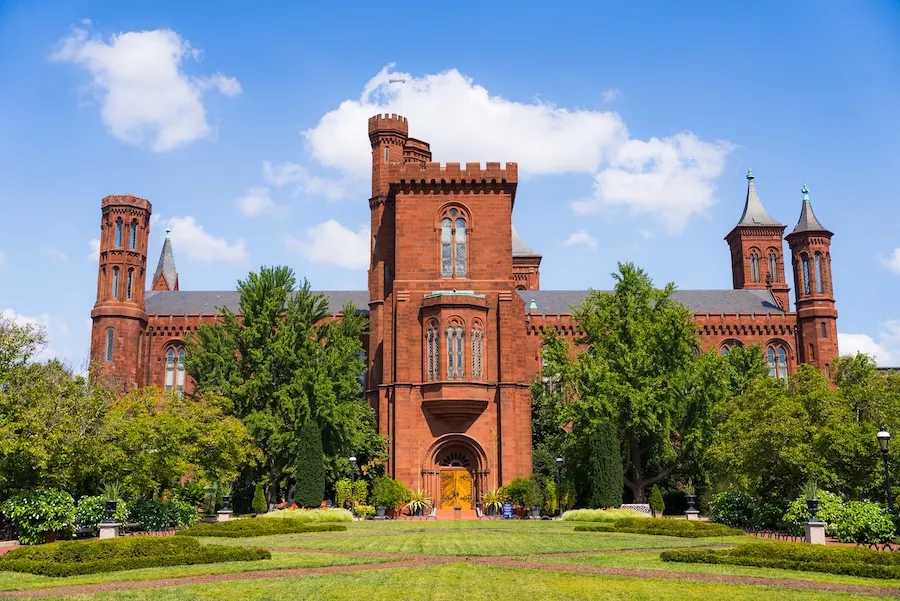
The Castle serves as both the informational and physical center for all Smithsonian museums in DC, anchoring the National Mall. It is easily accessible, located on Jefferson Drive SW, right off Independence Avenue and the Smithsonian Metro stop (Orange, Blue and Silver lines).
The picturesque Enid A. Haupt Garden connects the Castle to other Smithsonian sites: the National Museum of African Art, the National Museum of Asian Art and the Smithsonian Arts + Industries Building (currently closed for renovations).
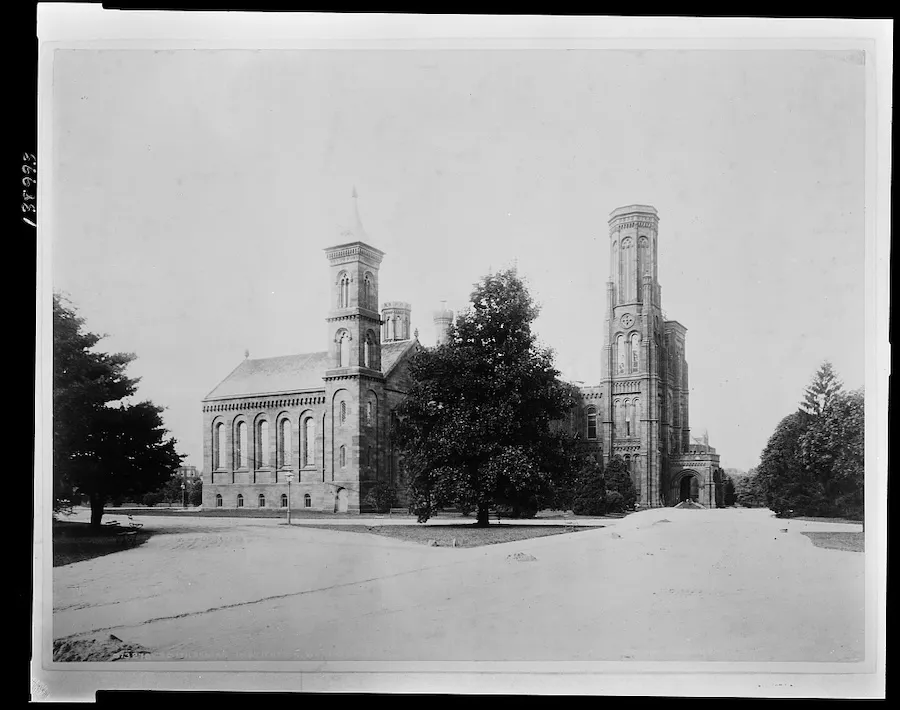
What's the history of the Smithsonian Castle?
For a man who never set foot in Washington, DC, French-born, British-raised James Smithson has had a huge impact on the city. The British scientist (1765-1829), an illegitimate son of a Duke, left his considerable fortune to a nephew with the stipulation that, were the nephew to die without heirs, the money go “to the United States of America, to found at Washington, under the name of the Smithsonian Institution, an establishment for the increase and diffusion of knowledge.” The nephew died, and a museum complex was born.
Why did Smithson leave such a large bequest to a place he’d never been? It’s a mystery, but theories abound. Perhaps he felt delegitimized by his homeland? Maybe he felt the U.S. might further science better than Europe?
The result of that gift, the Smithsonian Institution, was officially created by an act of Congress in 1846. Its first building, the distinctive red Maryland sandstone Smithsonian Castle, was completed in 1855. The towered neo-Gothic structure, designed by up-and-coming New York City architect James Renwick, initially held the entire institution: a gallery, a natural history collection, a laboratory and even the first secretary of the organization’s apartment. The Castle, along with the Arts and Industries Building, which opened in 1881 as the first home of the National Museum, comprise the Smithsonian’s Historic Core.
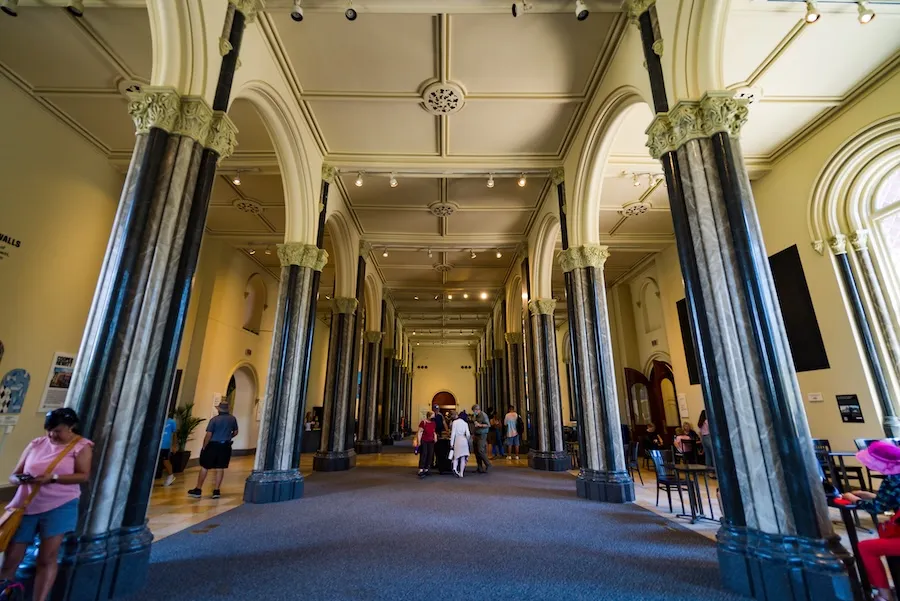
What’s inside the Smithsonian Castle?
Note: The information below reflects the building’s features prior to its closure. Check back for updates on new offerings once the Castle reopens.
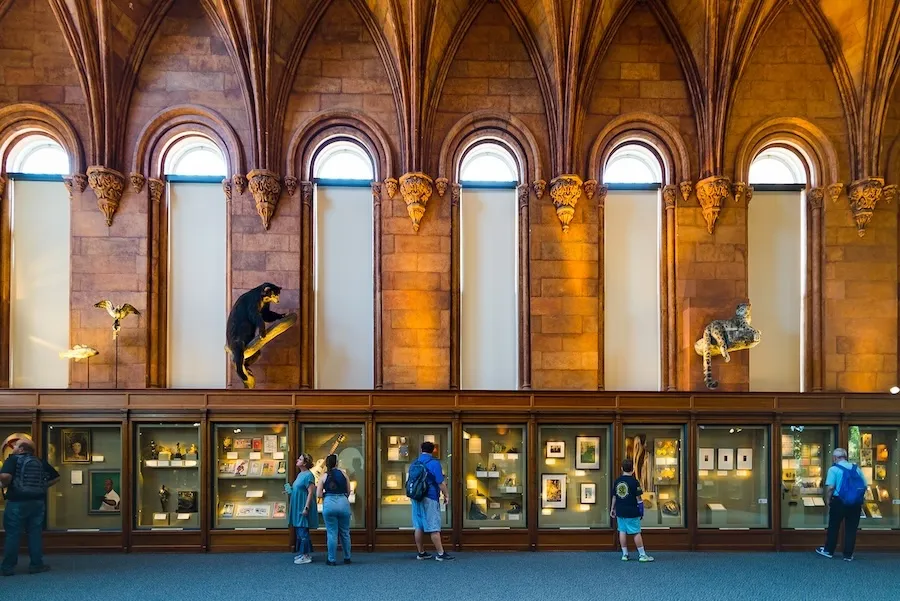
While the Victorian arches and dark woodwork of the Castle suggest a bygone era, it now holds a thoroughly modern visitors center with interactive 3D maps pinpointing and detailing the 17 DC-area Smithsonian Institution properties, including museums, galleries and the National Zoological Park.
Since most are on the adjacent National Mall, the maps can be particularly helpful for plotting a day of museum-hopping. Docents also staff a help desk and distribute printed guides. There’s also a coffee and snack shop and a large seating area with free Wi-Fi, an ideal place to take a break and plan your next move, be it bug-viewing at the National Museum of Natural History or a dip into contemporary art the Hirshhorn Museum.
Also housed in the grand, church-like structure is the exhibit A Castle of Curiosities, delving into the history of the castle and the little that is known about Smithson’s life. In the high-ceilinged rooms beyond, another exhibit, Welcome to the Smithsonian, holds art and artifacts representing all of the institution’s members in old-timey gleaming wooden display cases. Look out for the National Zoo’s “panda cam” showing its popular bears and ancient buddhas from the Sackler Gallery.
Perhaps most touching, the Castle also holds James Smithson’s crypt. He died in Genoa, Italy and was buried there, but in 1905, he was reinterred in a marble crypt in a small, chapel-like room in Washington, DC. Pay tribute to him here or by visiting the many museums his vision launched.
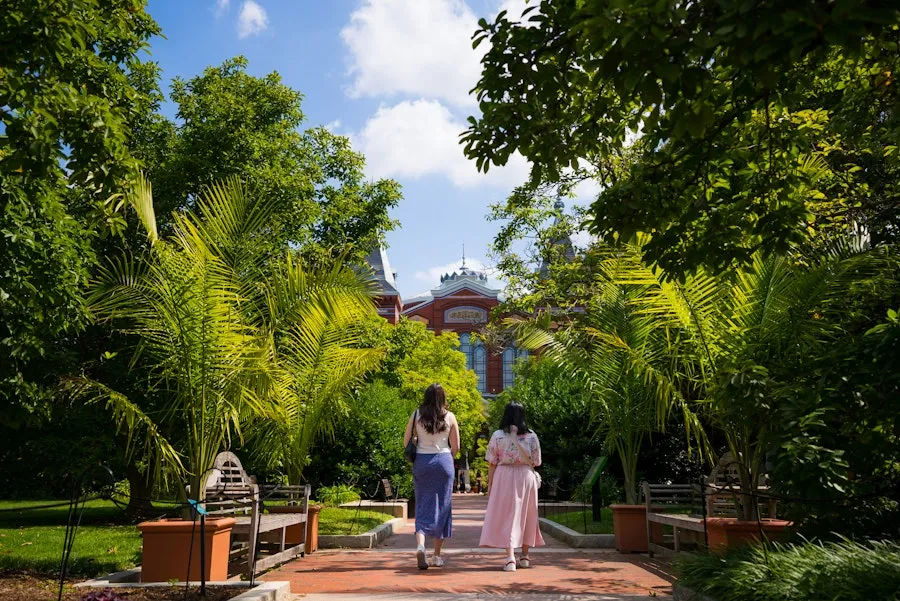
What is the Enid A. Haupt Garden? Where is it located?
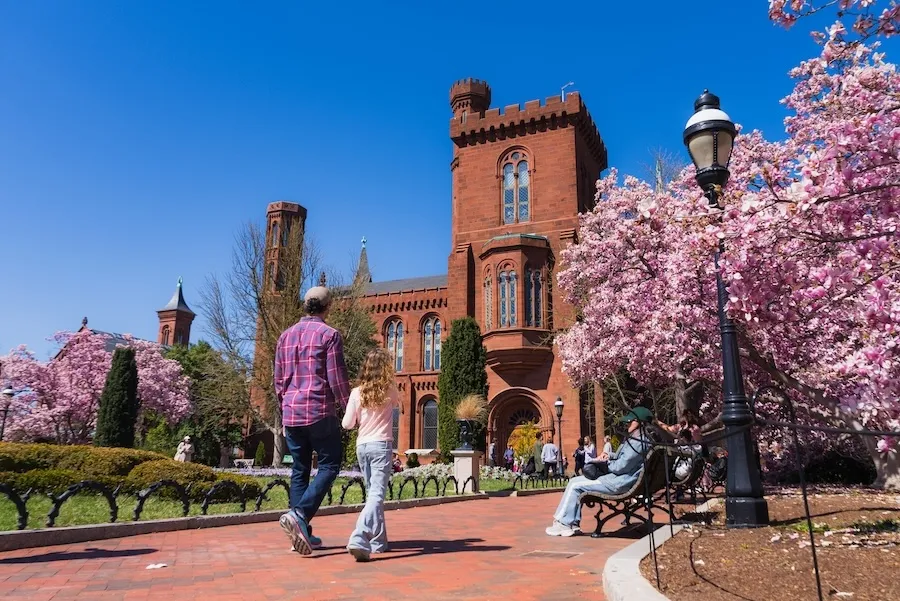
Tucked between the Smithsonian Castle and Independence Avenue, the Enid A. Haupt Garden is a can't-miss gem on the National Mall. Since 1987, the space (as we know) has helped welcome visitors to the Smithsonian Institution and the city. Brick paths connect four acres of green space, curated thoughtfully with blooming plants, manicured gardens, sculptures, fountains and benches for reading, relaxing and people-watching.
What most visitors don't know about the garden is that it rests above underground museums: the National Museum of African Art, the Arthur M. Sackler Gallery (National Museum of Asian Art) and the S. Dillon Ripley Center.


Partner Content